
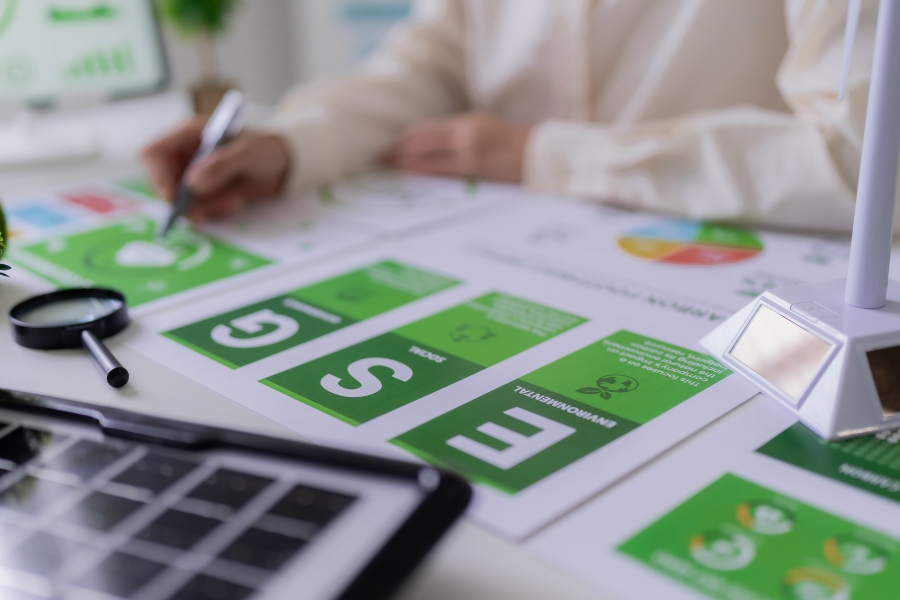
ESG in Grinding Industry – Concept and Importance
ESG (Environmental, Social, Governance) represents the three key pillars used to evaluate a company’s performance beyond financial metrics, focusing on environmental protection, social responsibility, and corporate governance. ESG in Grinding Industry
For manufacturers, ESG implementation is not only a commitment to sustainable development but also an increasingly critical expectation from customers, investors, and regulatory authorities.
ESG in grinding industry presents major opportunities for innovation, from developing longer-lasting grinding materials and improving energy efficiency to reducing dust emissions and waste. Each of these contributes to minimizing environmental impact and optimizing long-term operational costs. ESG in Grinding Industry
ESG in Grinding Industry – Practical Applications and Sustainability Aspects
Sustainable Grinding Materials – Longer Life, Less Waste
One key ESG approach in grinding is adopting high-durability abrasive materials that wear more slowly and last longer.
For example, diamond tools exhibit excellent wear resistance and extended lifespan, reducing replacement frequency, operational downtime, and abrasive waste.
When grinding tools last longer, less abrasive dust and residue are generated, cutting waste management costs and mitigating environmental pollution.
Energy Efficiency and Process Optimization
Optimizing grinding force, wheel speed, and contact pressure can significantly reduce heat generation and energy consumption.
In addition, the adoption of smart technologies, such as robotic grinding and self-optimizing grinding machines, allows better process control, minimizes energy waste, and improves consistency.
Lower grinding temperatures also extend wheel life and enhance surface quality, forming a more sustainable production cycle.
Eco-friendly and Recycled Abrasive Materials
Manufacturers are increasingly developing eco-friendly binder formulations, reducing harmful components and incorporating recycled materials.
Using green abrasives not only minimizes emissions but also aligns with ESG environmental standards.
If grinding tools are designed for reuse or regeneration, they further support a circular economy model, helping businesses cut costs and reduce environmental impact.
Lifecycle and Process Management (Life Cycle Assessment – LCA)
Implementing Life Cycle Assessment (LCA) enables manufacturers to evaluate environmental impact throughout a product’s entire lifespan, from raw material sourcing and production to use and disposal.
For example, some Vietnamese grinding plants have begun applying LCA-based evaluation frameworks to measure emissions and resource use across their operations.
Effective lifecycle management helps grinding companies reduce waste, improve production efficiency, and enhance transparency in ESG reporting.
Benefits of ESG Implementation for Vietnamese Grinding Manufacturers
- Long-term cost optimization: Durable abrasives and energy-efficient processes reduce maintenance and operational costs.
- Lower environmental impact: Less dust, reduced waste, and lower carbon emissions through energy efficiency.
- Enhanced brand image: Demonstrating ESG commitment improves competitiveness and credibility with global partners.
- Easier access to investment: Investors are increasingly prioritizing companies with strong ESG strategies.
- Alignment with national policies: ESG adoption aligns with Vietnam’s growing emphasis on sustainable manufacturing and government-backed green initiatives.
Challenges and Considerations in ESG Adoption
- Initial investment costs: High-performance abrasives (e.g., diamond tools) and automation technologies often require higher upfront capital.
- Technical and ESG knowledge: Companies must build expertise in lifecycle management and sustainability reporting.
- Recycling infrastructure: Systems for reclaiming and reprocessing used grinding tools are still underdeveloped in Vietnam.
- Regulatory differences: ESG requirements vary across export markets, so manufacturers must stay updated on compliance.
ESG – The Strategic Key to a Sustainable Grinding Future
ESG is no longer just a global trend, it is a strategic imperative shaping the future of the grinding and abrasives industry.
By focusing on durable materials, energy-efficient production, and lifecycle transparency, companies can achieve both economic gains and environmental responsibility.
At Grind Tech Expo Vietnam 2026, the latest innovations and ESG-driven solutions will be showcased, driving the transformation toward a sustainable, efficient, and future-ready grinding industry.
Book your stand now: https://checkin.veas.com.vn/book-a-stand/PRC2027/forms/gte?locale=en