

In the context of modern manufacturing and deeper global integration, the grinding industry plays a critical role in precision machining for industrial components. However, alongside its strong growth potential, the sector must confront a range of challenges facing the grinding industry in Vietnam and Southeast Asia, particularly in terms of technology adoption, skilled workforce development, investment capacity, and increasing global competition.
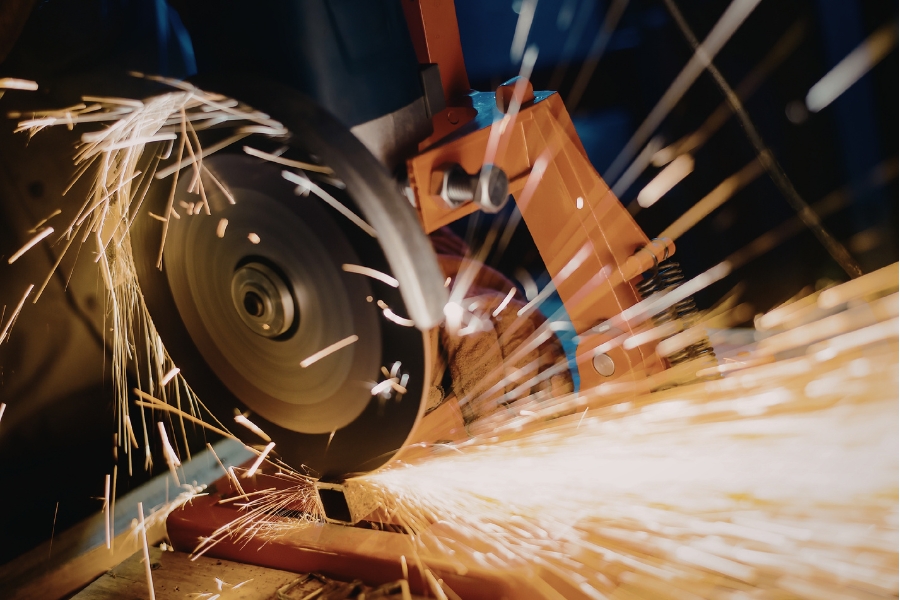
Challenges Facing the Grinding Industry – High Investment Costs for Advanced Grinding Technologies
Precision Grinding Machines Require Significant Capital Investment
One of the major challenges facing the grinding industry in Vietnam and Southeast Asia is the high initial investment required for advanced grinding equipment. Compared with other machining processes such as turning or milling, CNC grinding machines, especially those equipped with in-process measurement and advanced control systems, are significantly more expensive.
In addition, high-performance abrasive materials such as CBN and diamond abrasives come with higher costs and require periodic replacement due to wear. This increases the Total Cost of Ownership (TCO) for manufacturing companies operating grinding processes.
Financial Pressure on Small and Medium-Sized Enterprises
For small and medium-sized enterprises (SMEs) across the ASEAN region, limited access to capital remains a major barrier to investing in next-generation grinding technologies. As a result, many companies struggle to upgrade their grinding capabilities, which directly impacts machining accuracy, productivity, and product consistency.
Beyond the cost of machinery, maintenance and repair of high-precision components, such as spindles, servo motors, and CNC control systems, require specialized expertise and additional operating costs. Over time, these factors further increase long-term operational expenses.
Shortage of Skilled Workforce and Technical Expertise
Grinding operations demand highly skilled personnel with deep technical expertise. This includes CNC machine operation and fine-tuning, abrasive selection and maintenance, and the ability to interpret measurement data to optimize grinding processes. However, shortages of skilled labor remain a widespread challenge in Vietnam and many Southeast Asian countries.
Advanced training programs in grinding technology, automation, and robotics are still limited in the region. As a result, companies face higher training costs and difficulties in maintaining consistent quality across production lines, particularly when operating modern CNC grinding systems that require knowledge of programming, automation, and data analysis.
Dependence on Imported Technology and International Standards
Reliance on External Grinding Technology Supply Chains
In Vietnam and many Southeast Asian markets, the challenges facing the grinding industry are due to the majority of CNC grinding machines, high-performance abrasives, and automation solutions are still imported from global technology leaders. This reliance on imported equipment exposes manufacturers to higher investment costs, longer technology adoption cycles, and risks related to logistics, import duties, and global supply chain disruptions.
Such dependency places additional pressure on local manufacturers, especially SMEs, seeking to modernize their grinding operations while maintaining cost competitiveness.
Pressure to Meet Global Manufacturing Standards
As Vietnamese and Southeast Asian manufacturers increasingly integrate into global supply chains, they face growing pressure to meet international standards related to precision, process stability, workplace safety, and environmental compliance.
Meeting these standards requires not only investment in advanced machinery, but also the implementation of quality control systems, measurement technologies, and real-time process monitoring aligned with global best practices. For many companies, this remains a significant challenge as local technological capabilities and implementation experience are still evolving.
Environmental and Occupational Safety Challenges
Grinding processes generate abrasive dust and fine particles that can pose serious health risks to workers if not properly controlled. The implementation of dust collection, air filtration, and waste treatment systems is no longer optional, it is a fundamental requirement for workplace safety and ESG (Environmental, Social, and Governance) compliance.
Across Southeast Asia, many manufacturing facilities are still at an early or intermediate stage of adopting environmental control solutions. As ESG requirements become increasingly important within global supply chains, manufacturers are under growing pressure to invest in cleaner technologies and safer working environments.

Conclusion – Grind Tech Expo Vietnam 2026
Despite strong growth potential driven by increasing demand for precision manufacturing, automation, and regional supply chain integration, the challenges facing the grinding industry in Vietnam and Southeast Asia are substantial technological and operational challenges. Overcoming these challenges will require strategic investment, technology upgrades, and long-term capability development.
In this context, specialized industry platforms such as Grind Tech Expo Vietnam 2026 play a vital role in connecting manufacturers with advanced grinding solutions, facilitating knowledge exchange, and enabling collaboration with global partners, supporting the industry’s transition toward higher precision, sustainability, and global competitiveness.
Book your stand now: https://checkin.veas.com.vn/book-a-stand/PRC2027/forms/gte?locale=en